

Issue No. III: HOME
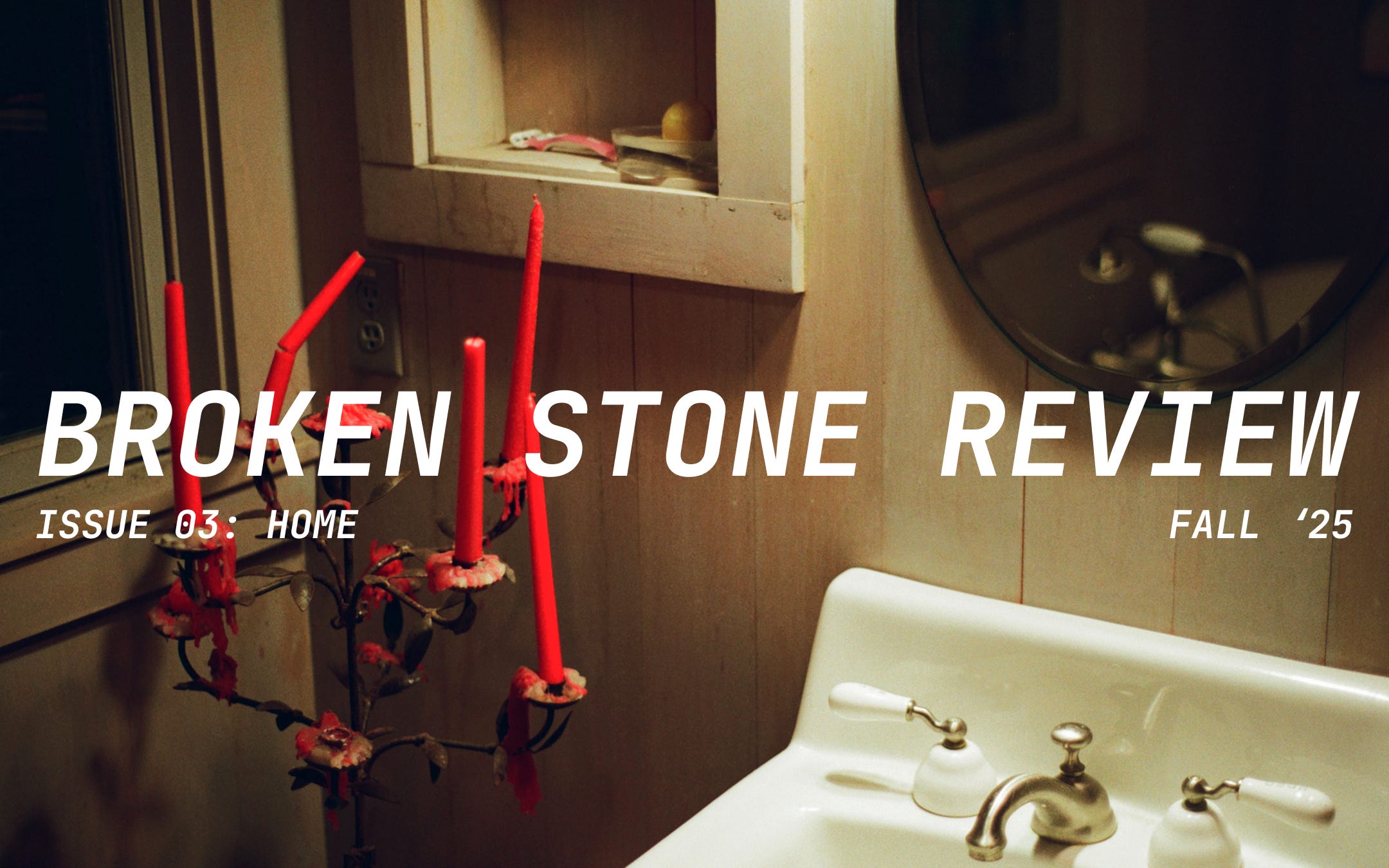
I had mixed feelings about this issue’s theme. Home feels in the mouth like oversweet caramel. Like schmaltz, too rich to swallow. I gag on it a bit, like a pet’s name on an About the Author page. I live in the hills outside Los Angeles with my wife, Clementine, and my scoundrel mutt, Arlo. Grow up! Sorry.
Anyway, I stuck with it, obviously—despite the live laugh love, but first coffee, keep calm and wine on-intonated millennial earnest ick that the word first ignites in me (a curse upon Edward Sharpe’s house)—because I like to think home is more than just the place you lounge around in wearing your skinny jeans and your I Moustache You A Question t-shirt.
Home takes many forms. It can be a person, like your grandmother, lover, or trusted legal advisor. It can be an object, like your favorite pillow or your iPhone. Machu Picchu was someone’s home (I think). So were all seashells. So is Mar-a-Lago. You get it.
Great art (and, honestly, a lot of not-great art) can feel like a kind of home. A home for memories and thoughts and feelings and all the things you used to have that you’ve since lost or regifted or sold for parts or tried to DIY into something else but then ruined and had to throw away. Or places you’ll never return to, but want to visit again and again. Stories of horror and humiliation that you need to write down so they stop playing over in your head. Things you can’t believe you saw; things you need to see to believe.
Not just an obnoxious scroll of selfies and accidental screenshots, even my camera roll is a kind of psychological map. Like my real home—I’m talking about my parents’ house, not my bullcrap tinderbox Brooklyn apartment—my photo archive is cluttered with reminders of all the things I used to do, primary sources indicating what I once thought ought to be preserved, and all the people I used to think were hot.
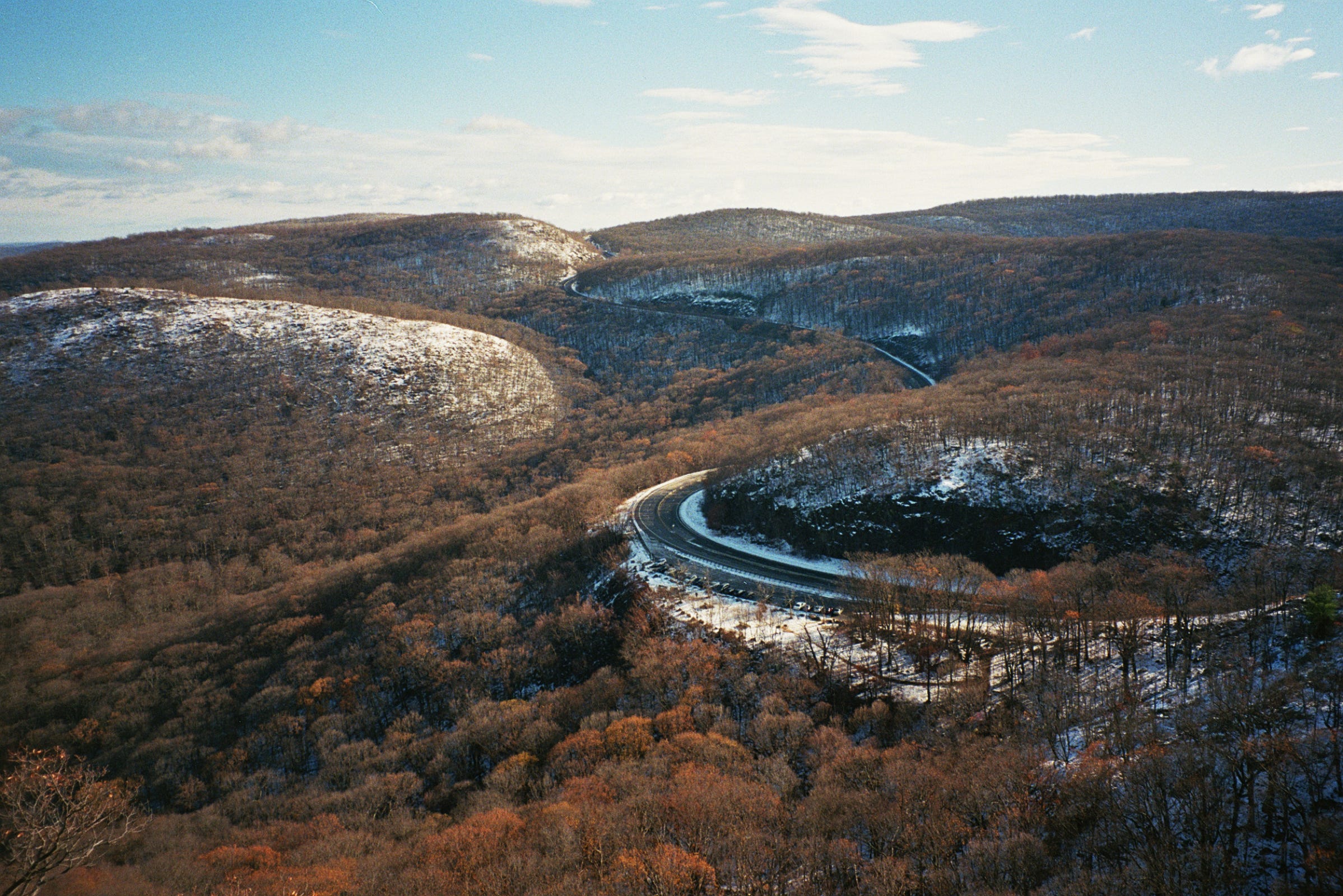
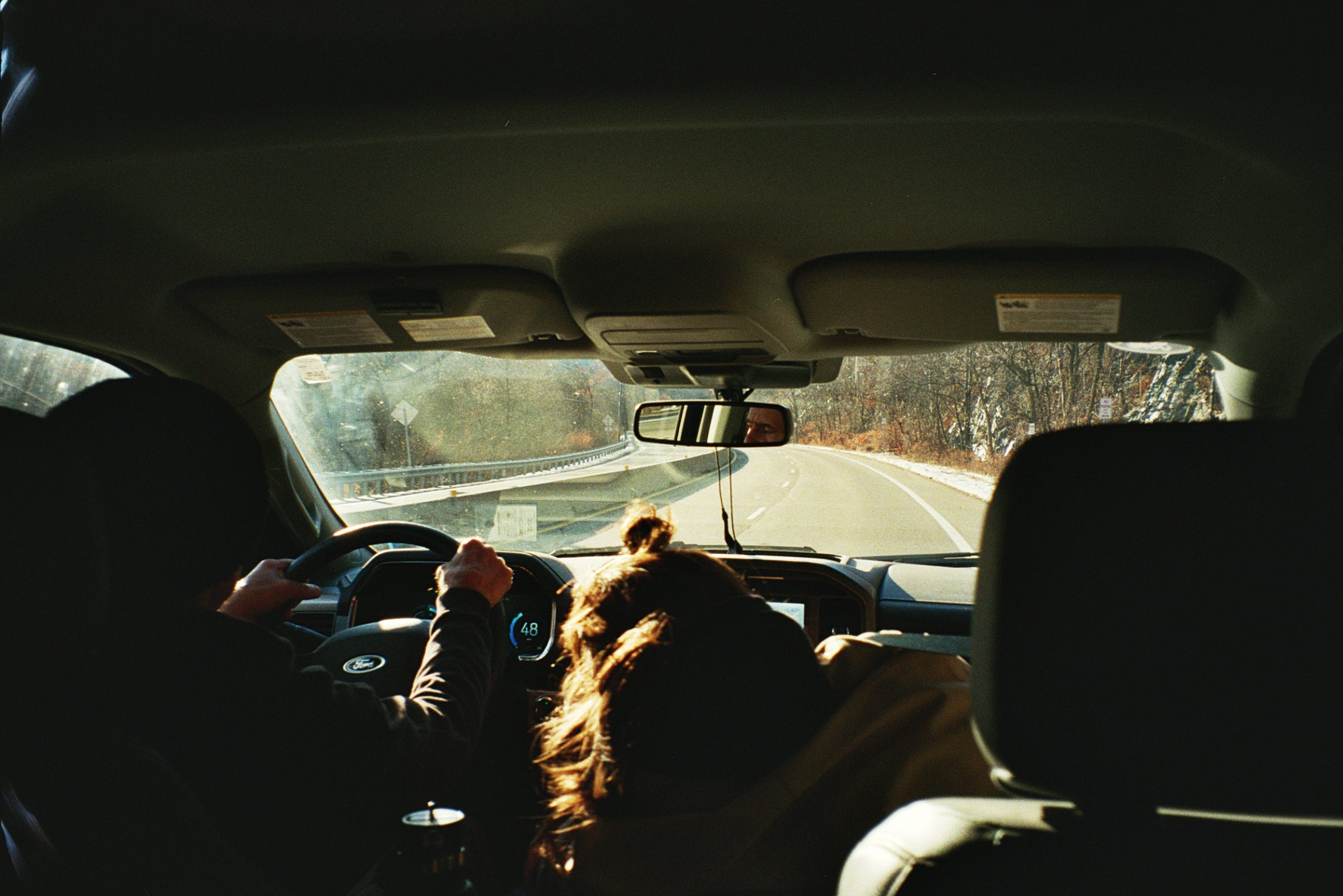
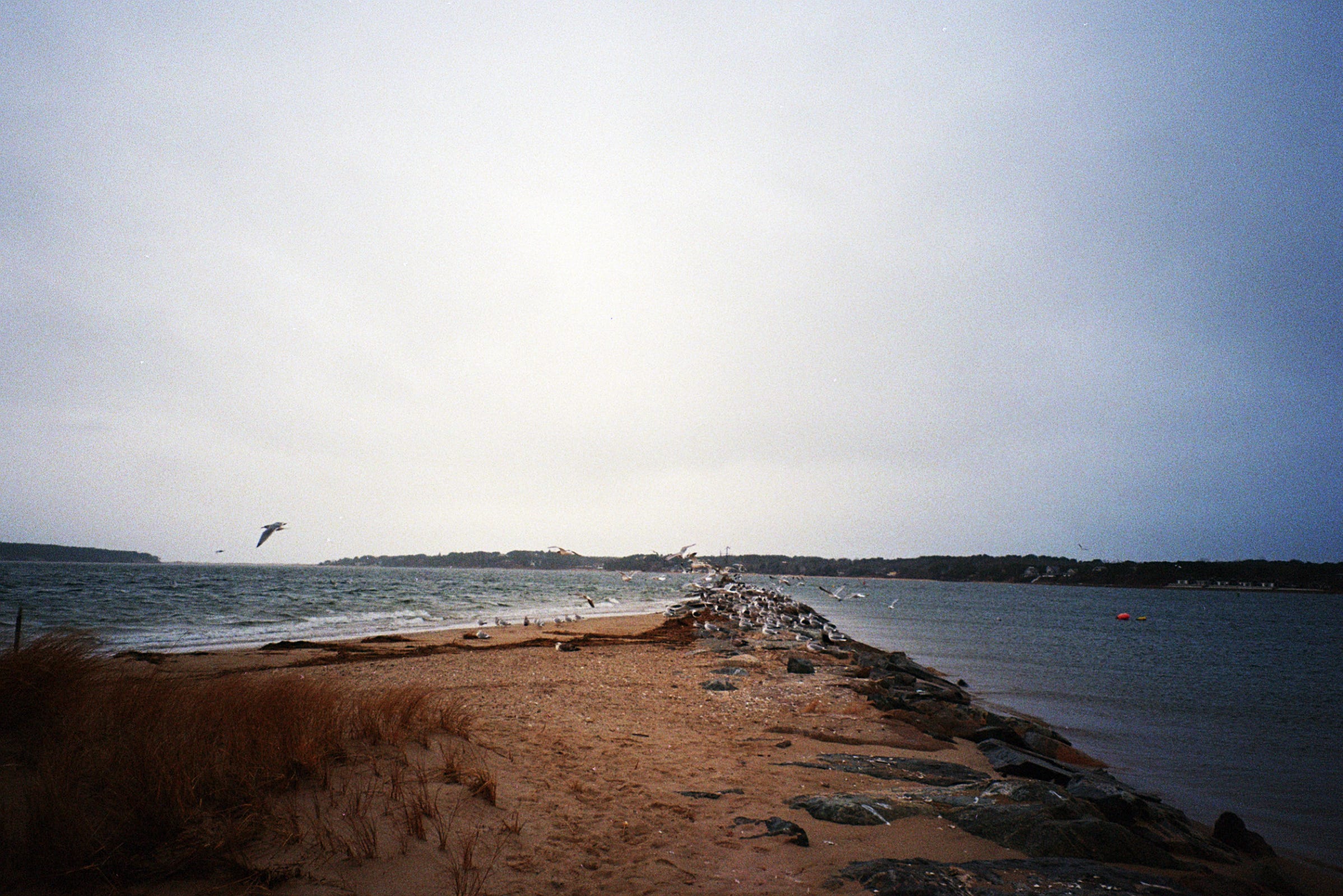
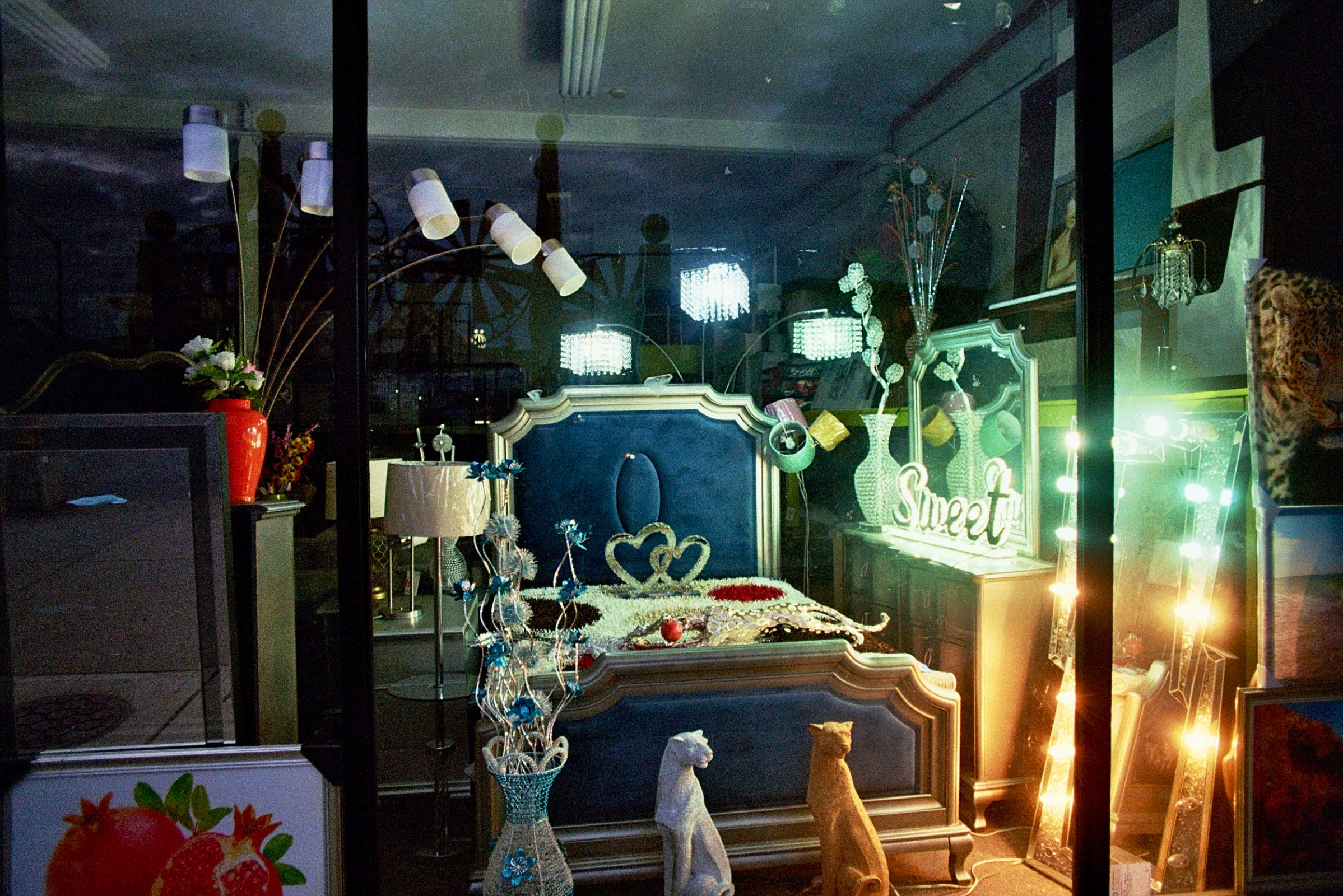
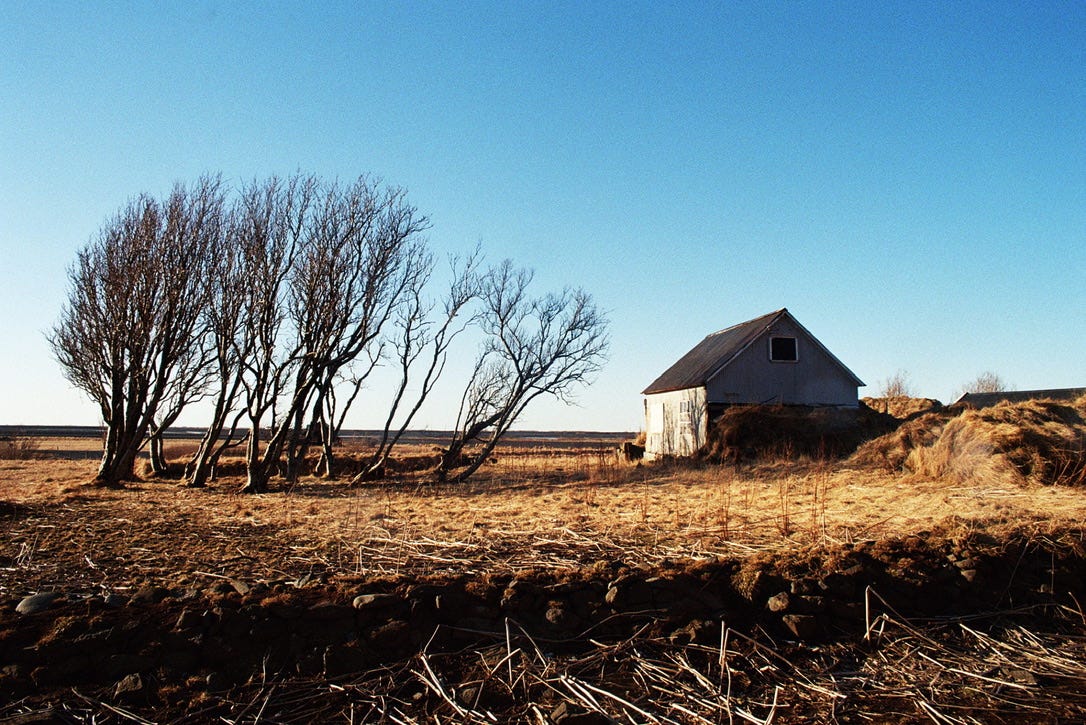
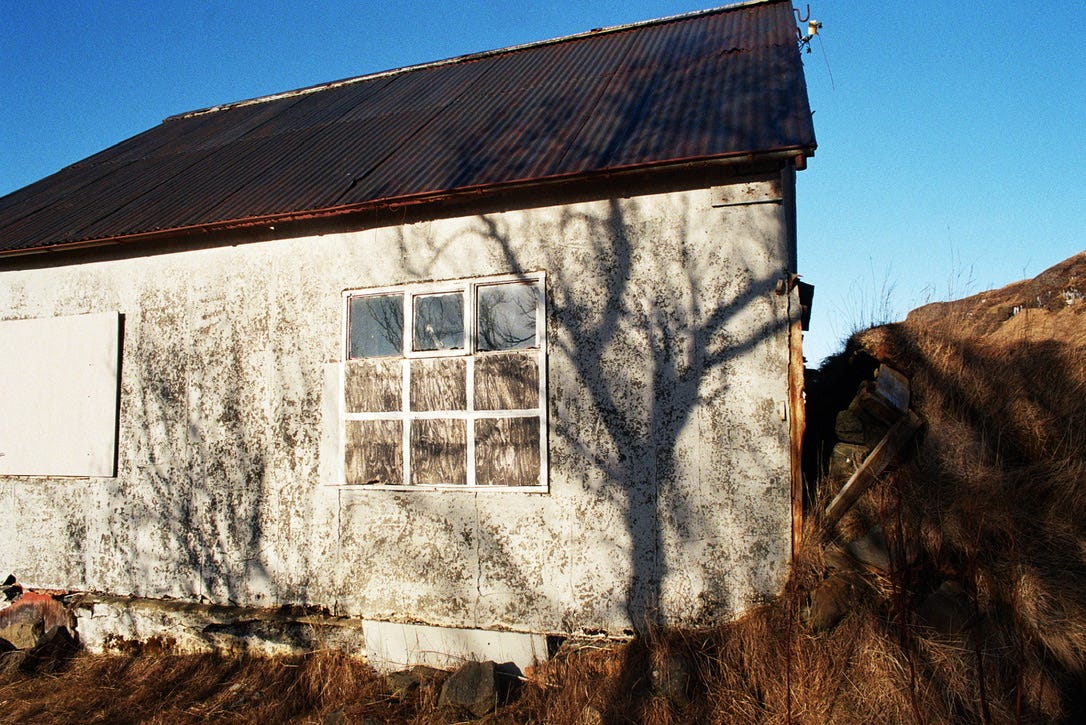
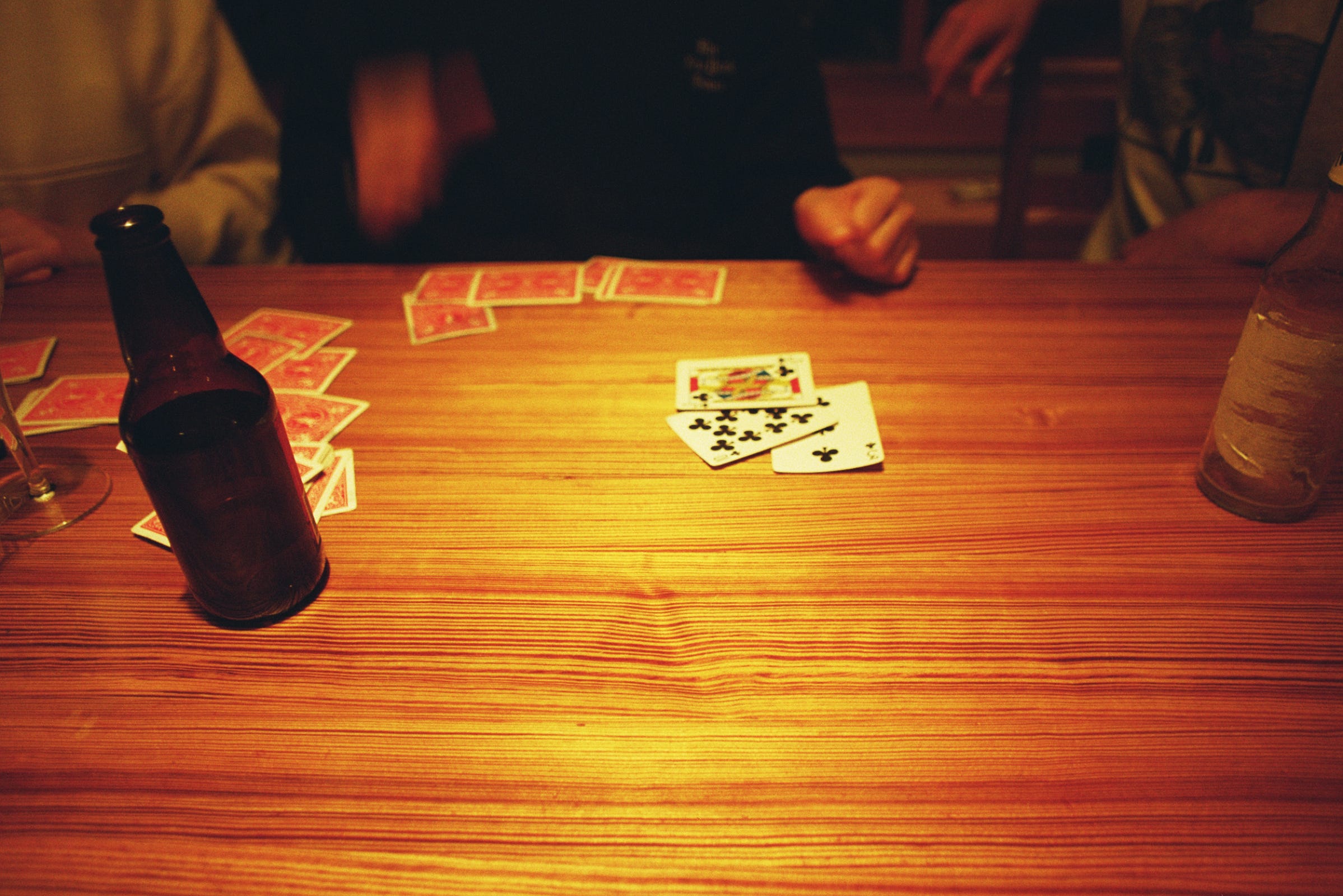
The photographs in this issue were shot on 35mm film (mostly the cheapest on the market, if you want to get granular) in and around places I’ve called home and, in some cases, places in which I’ve felt particularly at home. Some of them are of homes—content slams into form, the crowd roars. To categorize more coherently, these are photographs that offer some kind of refuge against the emotional elements, homeopathic anti-nausea against the stomach-turning switchbacks of life, and/or insurance against the unfathomable process of forgetting. I like them, and I look at them often.
This issue of Broken Stone is home to over a dozen perspectives on home, ranging from the nostalgic to the ironic to the positively delicious. Despite the theme’s apparent saccharine inflection, the contributors to this issue of Broken Stone Review expertly evaded its most earnest and sentimental booby traps. Instead, each created a novel, unexpected work more than worthy of becoming your temporary home as you visit it here, and even one you might return to, again and again. It’s great, you should really read it!
Elias Levey-Swain
Settling
Noel Lee
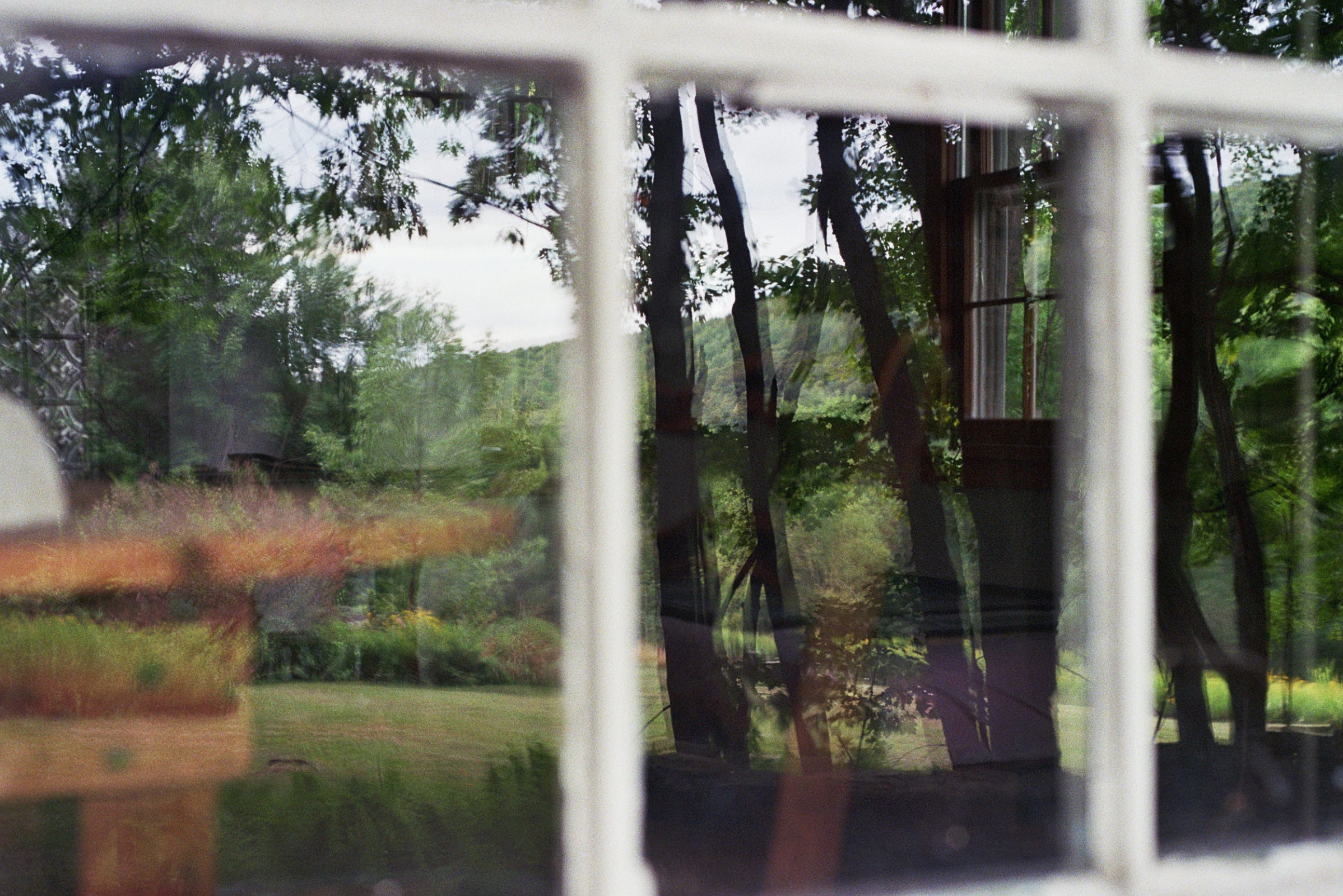
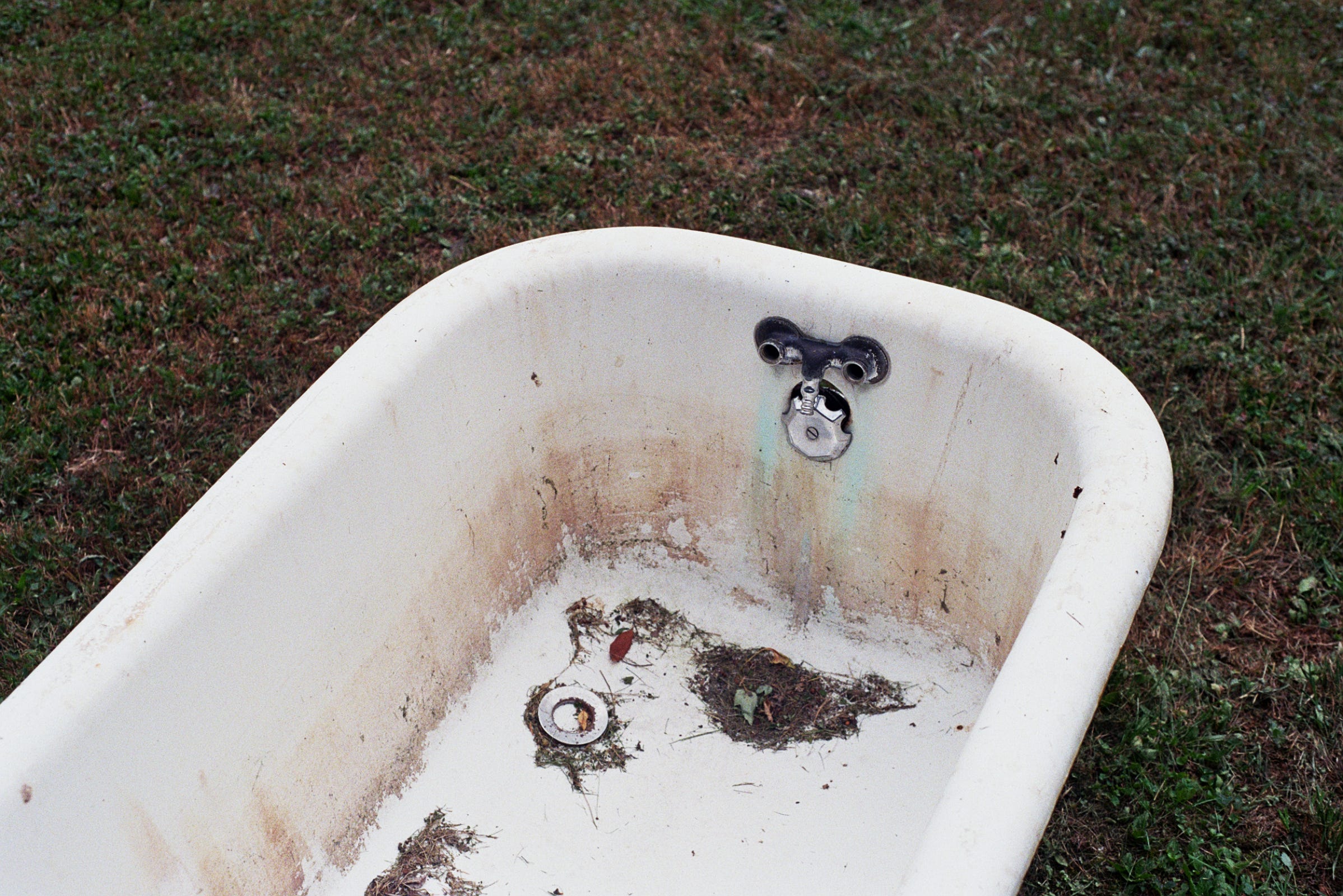
My new apartment is very old and functions as a lighthouse for docking pigeons. How many birds must contribute to the Jackson Pollock-style bombing of the threshold of [redacted] Avenue, which freely harbors cigarette butts, stray feathers, torn off corners of candy bags, pen caps, etc.? The unit’s precarious windows, with frames like gently slipping tube tops on sweaty afternoons, also bear virtuosic turd smears in hard-to-reach corners. Nothing to be done, it seems, but pray for rain.
I have a blurry recent memory of a friend sat across a gummy dive bar table strewn with shot glasses advising me to quit whining about the goddamn birds and <<insert Korean idiom here for getting on with making a home of it, for settling in and unfurling>>, as a wealth of pigeon shit is not strictly a breach of the implied warranty of habitability or otherwise grounds for early termination of a residential lease, and which idiom neither of us can now seem to recall. I also can’t remember how to go about making a home.
The first time I moved was for college, and upon landing, I was desperately and tediously homesick. I fell into the habit of scrupulously using the referent “home,” which at the time meant my parents’ still house, not my bare dorm room—an exercise in slight semantic defiance. To be loose with the domestic designation feels imprecise, as is my older brother when he refers to Airbnbs and hotel rooms as home, or disloyal, like my little brother, who left home and never looked back.
This apartment and I are three-and-a-third months old together (three months flat, if you deduct the intriguing five business days at the start of my lease when the building manager was AWOL together with the keys, which, incidentally, is somehow also not grounds for early termination). Psychic unclenching has progressed such that I putter about barefoot sometimes. I figure the apartment’s topsoil by now must consist mostly of my own cell coating, rather than that of my filthy animal predecessor, who evidently made not much headway at all against the dust of ages. The process of homemaking for the untreated but mostly functional OCD brain might begin with completing sufficient laps with a Swiffer to stop feeling like the floor is lava!
Home is the place that you don’t notice while you’re there and compare everywhere else against when you’re not. Home casts friendly shadows.
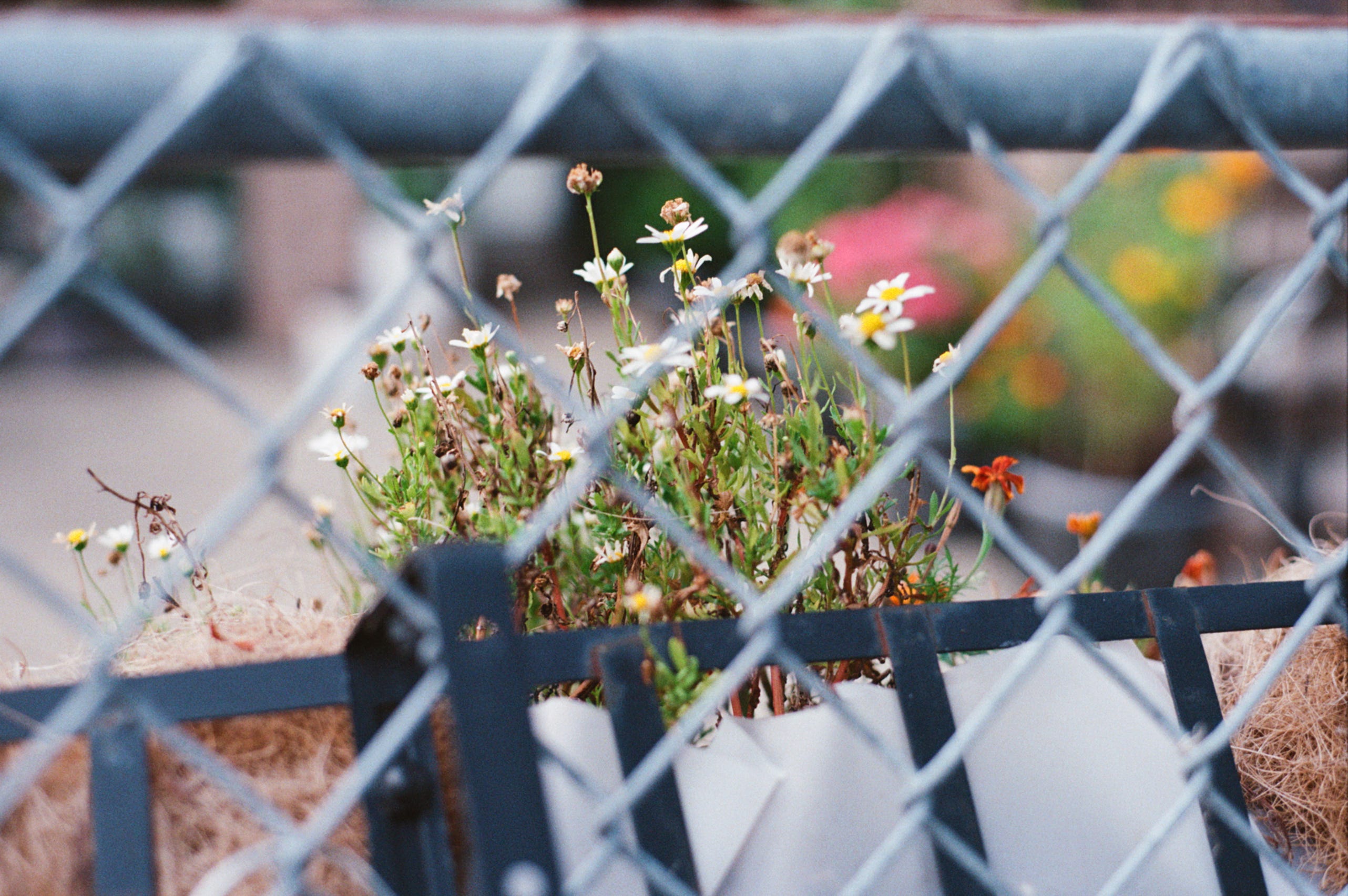
My plants have quietly decided amongst themselves which will languish and expire in the new sunlight situation and which will coil and unfurl. Trash is out back in the snarl of a yard. I ventured out after heavy rain to find the fence draped in white flowers.
Soundscapes
Sophia Ptáček
Voice memos, I’ve found, are a good cure for homesickness. I’m living 2,526 miles away, and all I have to do is click on a recording to listen to the bleats and rustles of home, the sounds of New York’s Hudson Valley. Many of my recordings are of frogs, and that’s not the most profound reminder of where I’m from. But here, in Bogotá, I play that shit on repeat and imagine myself mucking through the reeds back home, headlamp flickering here and there, searching for tree frogs the size of my nail. Tiny things make the most ear-blasting call you can imagine. As far away as I am, these sounds call me back home.
front doorbell, childhood home / plus some interruptions from Anya and Sam
kayaking the Hudson
REASONS TO HATE KENTUCKY
Nix Carlson
the roads are all too narrow razor thin margins urban sprawl and pastures blur i can’t tell the two apart i used to inhale expansive skylines exhale shimmering stardust on the end of a marlboro the lexington skyline has two buildings the outside smells like walmart in 2006 concrete sweat freon breath women are sticky honey sweet flies and dirt and shit cling to white skin you’ll never be clean of it signs refuse to serve more than two drinksnot that i can stomach bourbon anywaythere is red everywhere staining me bloody hands bloody tears bloody lungs bluegrass is inescapable even dives for queens haunted by a mandolin’s reedy scream i lost my soft edges and thirst for wednesday night champagne land stopped looking like home somewhere around the great lakesi’m threatening to spill over into madnessthere’s no you herenot that it matters.
Points A to B
Nicola DiFusco
Friday Evening
I’m picked up from the airport by a Tesla. I can never quite figure out how to open the doors, I always hesitate when met with the flush handle that requires an unintuitive press and pull. The interior smells overwhelmingly of vanilla air freshener, the synthetic sweetness coating everything. Still, sitting in the back seat, I feel dropped into some near future. The expansive glass moonroof frames the darkening Iowa sky.
I imagine my younger self watching this moment. What would I make of the names scrolling across my phone’s lock screen? Would I have pictured myself taking a forty-eight-hour trip to Des Moines for a coworker’s wedding? Through the glass, low buildings slide past in parallax. Office parks, a water tower, long stretches of trees punctuated by chain restaurants.
The dashboard display dominates the front of the car, an enormous touchscreen showing a simulated model of our drive. Ghostly figures pan across it, other vehicles rendered in gray wireframe; no pedestrians out. Our Tesla glides down the centerline, a sleek cartoon of itself. A notification appears in the corner, then another. The interface pings softly. The driver swipes something away without shifting his gaze from the road.
Outside, Des Moines looks more familiar than I expected. The buildings downtown are modest, spaced apart. We pass a Jimmy John’s, a closed insurance office, a bank. The display pings again. The driver glances down, swipes, returns to the windshield. The rhythm seems practiced, automatic, a choreography of attention.
I watch the third-person simulation of our car floating down residential streets, anticipating the turn toward the Airbnb. When we arrive, I thank him and slam the door too hard, the way you always do with Teslas. Through the window, I watch him accept the next ride.
Saturday Morning
We’re leaving Gray’s Lake and heading to the Botanical Garden. The red Nissan pulls up, its bumper stickers telling an immediate political story—one I’m wary of parsing. When the door opens, reggaeton pours out, and I’m surprised into a kind of relief.
The GPS speaks in Spanish, the voice emanating from a smartphone mounted on the dashboard. Next to it, a built-in touchscreen dominates the center console, its interface sculpted with geometric shapes and bright, tactile buttons. The two systems seem to compete for space, for authority. One gives directions, the other displays our route. I can’t tell which the driver trusts more.
Every vent is a hive of air freshener sticks, at least a dozen of them crammed into the slats, their waxy colors fanned out like a chemical bouquet. The scent is astonishing, floral and synthetic and somehow also fruity. It competes with the vanilla from last night’s ride, but this one is winning.
The headrests of the front seats are covered with spandex sleeves printed with cartoon faces. Big round eyeballs stare back at me, blocky white teeth frozen, permanently agape. They look both handmade and mass-produced, a particular aesthetic of online gamified marketplaces. I study the shading, the light sources, the too-perfect reflections. The longer I look, the more uncertain I become, AI-generated or just cheap 3D rendering?
I spend the ride oscillating between two questions: whether I’m looking at algorithmic generation, and whether I have the courage to speak to the driver in my halting Spanish. I decide to overlook both. We ride in silence except for the music and the GPS announcing turns. When we arrive at the gardens, I say thank you in English.
Saturday Evening
The ride to the wedding is a blue Ford Bronco, one of the new ones I only know from TikTok crash test videos, where they crumple like aluminum foil. Shannon pulls up looking like someone’s fun aunt: oversized sunglasses, silver jewelry catching the late afternoon light.
The interior is as rhinestoned as her accessories. The gear shift has a crystalline cover. Small gems are affixed to the edges of the air vents. Even the cupholders sparkle.
“I like your bling,” I say, sliding into the back seat.
“Thanks, I spend a lot of time in here,” she replies, adjusting one of her phones.
Two smartphones are mounted side by side on the dashboard, both running rideshare apps. A tablet is wedged into a cupholder, showing what looks like a route optimization program with a heat map of the city. A portable battery pack sits on the center console, black cords snaking between devices like vines. The whole setup has the feel of mission control.
Shannon tells me she’s not from Des Moines, she’s in town for a CAT scan and figured she’d make some money while she’s here. One phone for Uber, one for Lyft. The tablet tracks surge patterns and busy zones. She glances between them in constant rotation: left phone, right phone, tablet, road. The car knows this rhythm too, accelerating smoothly, turning with the muscle memory of hundreds of trips.
We pass through downtown, then out toward the suburbs where the venue is. The wedding is at a historic mansion, she tells me. She drove someone there last weekend. I watch her eyes move across the array of screens, making calculations I can’t follow. The algorithm and her intuition seem to work in tandem.
When we arrive, the gravel lot is already half full. Cars parked at odd angles, people in dresses and suits picking their way toward the entrance. Shannon wishes me well, and I watch through the rear window as she continues to check all three devices, her fingers moving across the screens, already hunting for the next fare in the network of streets and data.
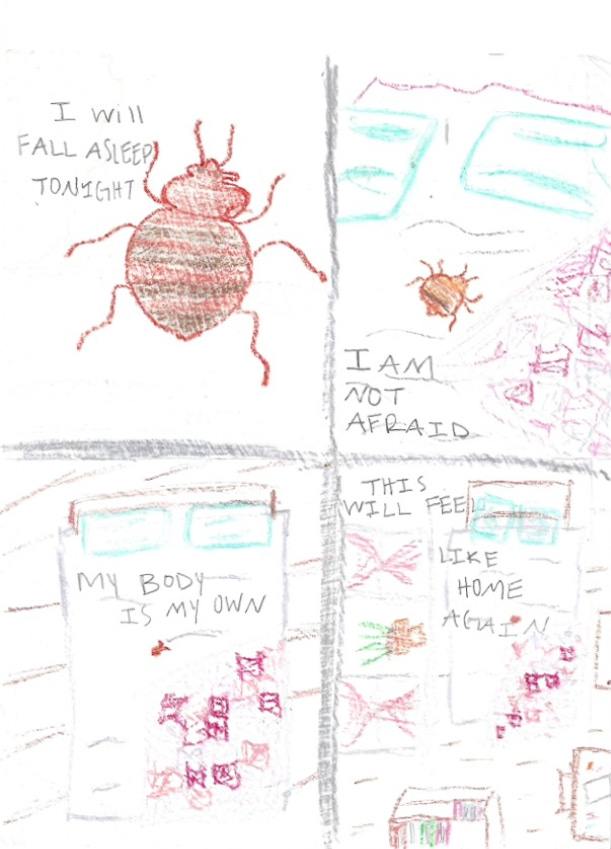
Bed Bug Affirmations
Zibby Trewartha-Weiner
Home in August
Felipe Jimenez
Before the summer’s through
I’d like for you to write me a letter and mail it from somewhere you’ve
never been before
                          -   a new memory, an old nightmare
           a jersey boardwalk,
           the north woods
           the far end of long island, where america still reigns, -

                     it doesn’t make so much a difference where.

But I never receive post anymore, and a scene from a scratched-up old
movie reminded me of the joy of reading mail scribble,

ink melodies burned by oxygen
seminal works forgotten by the very best of our generation
vanished in the virtual machine & ensnared by
the soft glow of televisions humming
neon green on saturday night.

Still learning to count our lucky stars, we retreat into lighthouses and
sacred forests,
make our beds in tundra deserts and receive the sacrament of solitude in
cool blue jungles spangled with acidic waters
toying with the dangerous game of ecstasy in a cricket-infested night
releasing all our power

To the sea.

Before the summer’s through,
Just a letter will suffice – no secondhand gossip, or text messages circled
blue on my
device, which knots me in a figure 8 to society,
          the globalized dream of ghosts who haven’t made their way yet to the
          crashing waves of regret, and with bleeding eyes cackle
                    	        as they remember failure,
                    & what a funny thing it was.

Late summer begins on eastern parkway –
        	Heat waves on their way
        	More ocean, more ice, more sparkling serenading truths
        	& a glistening rush of autumn
        	Sent by the old sea god Neptune –

        	A peace offering, and a homecoming gift.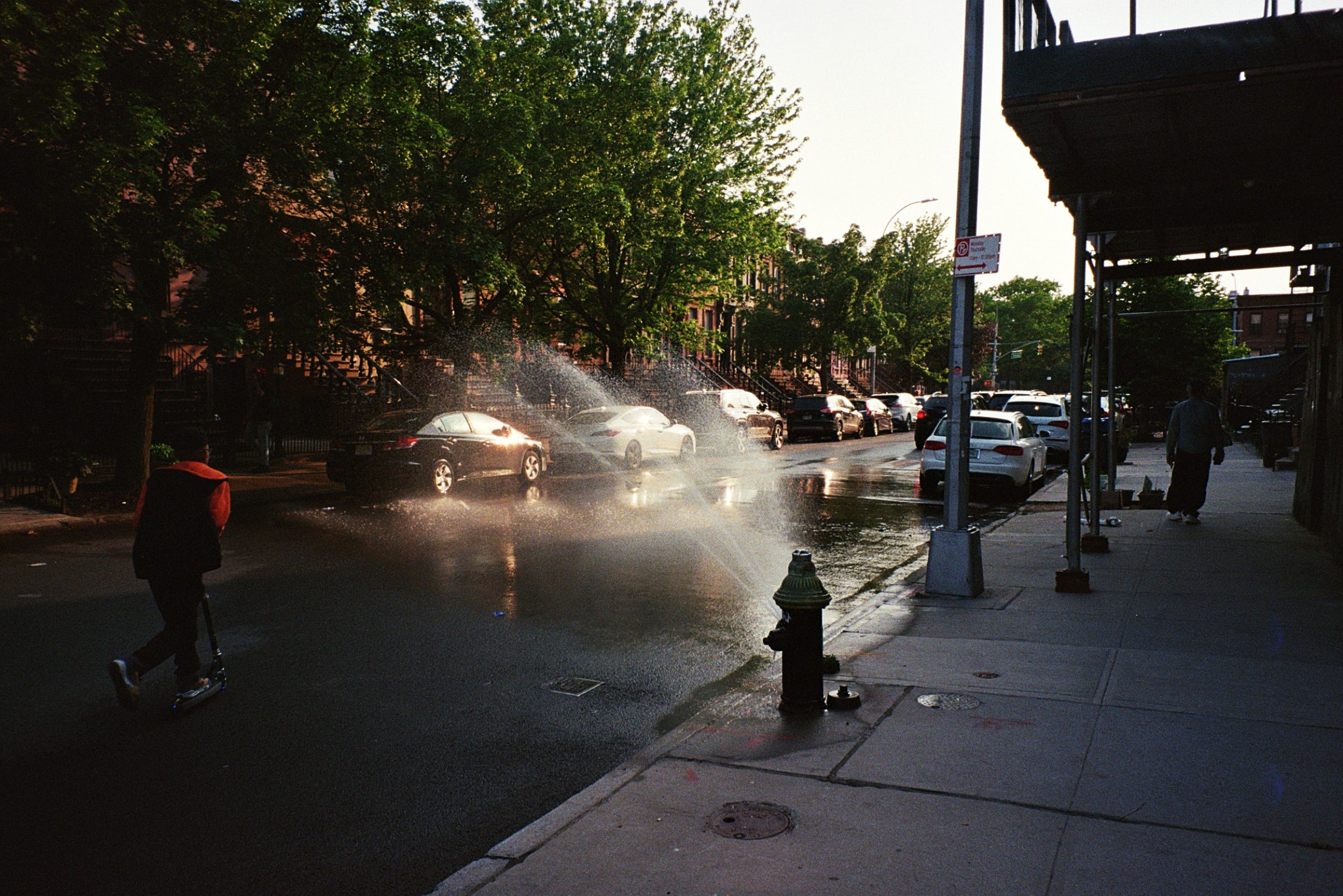
spring peepers
tree frog
Chocolate Chip Gingersnaps
Anya Ptáček
I want to go where the chocolate chip cookies are. Because where the chocolate chip cookies are, there must be my house. I set up residence wherever I can eat cookie dough, smell the caramelization of butter and sugar, and lick chocolate off my fingers. I created this ginger chocolate chip cookie recipe as an homage to my mom, who is made up of ginger and nutmeg and flaky salt and dark chocolate.
Grating the ginger is the most tedious part of this recipe, but I promise you the pay-off is worth it. If your ginger is still stringy after you grate it, feel free to mince it further using a knife. This cookie is crispy-crunchy, but it will melt in your mouth all the same. My wish is that the ginger will knock you over the head and kiss you goodnight. If that doesn’t sound good to you, that’s too bad. My house, my rules.


1 ⅓ c (160g) All-Purpose flour
½ tsp baking soda
½ tsp salt
2 tsp ground ginger
Pinch nutmeg
1 c (200g) granulated sugar
¼ c (55g) brown sugar
1 ½ sticks room temp butter (¾ c)
4 tbsp’s grated fresh ginger (grated in the smallest holes of a cheesegrater)
1 egg, room temp
1 ¼ c dark chocolate chunks
1 ¼ c turbinado sugar
Flaky salt (optional)
Prep time: 30 minutes
Total time: 1 hr 15 mins
Yield: 30
In a small bowl, whisk flour, salt, ground ginger, and nutmeg until fully combined.
Squeeze the grated ginger above the bowl of a standing mixer to catch all the liquid. Add two tablespoons of the squeezed ginger into the bowl and save the remaining two for later.
To the same bowl, add granulated and brown sugar. Rub mixture with your fingertips until the ginger is dispersed throughout. Using the whisk attachment, cream butter and ginger-sugar until light and fluffy, about 2 minutes. Add in egg and beat until just combined.
Using a rubber spatula, fold flour mixture into creamed butter and mix until 80% combined. Add chocolate chunks and continue folding until no streaks of flour remain. Use your spatula to press the dough up the sides of the bowl so it chills more evenly. Freeze dough for 30 minutes or refrigerate for an hour and a half.
Meanwhile, line two baking sheets with parchment paper and preheat your oven to 350º. In a small bowl, rub turbinado sugar together with remaining two tablespoons of ginger.
Scoop dough into tablespoon-sized balls and roll in sugar-ginger mixture. Bake 6 cookies per tray for 13-14 minutes, rotating trays after 7 minutes. Cookies will be golden brown all over and will have spread a good amount. Sprinkle with flaky salt, if using. Keep remaining dough in the fridge while your cookies bake.
Allow to cool for 5 minutes before removing from tray. Repeat with remaining dough.


Star Gazing
Elizabeth Dingmann Schneider
On a 15-degree night in February,
I’m outside, coming back
from a midnight outhouse visit—
one I had been dreading
and was hoping to avoid.
But now that I’m here,
I linger,
my body still warm
from the wood-burning stove
heating our small cabin.
I breathe the cold air into my lungs
and gaze up,
up at the clear night sky
that would be hidden by tree cover
in any season except for this,
deep winter.
I greet my favorite constellations,
visible between the black, branching fingers
of the oaks and maples,
Oh, familiar stars,
I can’t even remember the last time we met.
Orion, Cassiopeia, I’ve missed you,
craved you from the depths.
SNOWFENCE
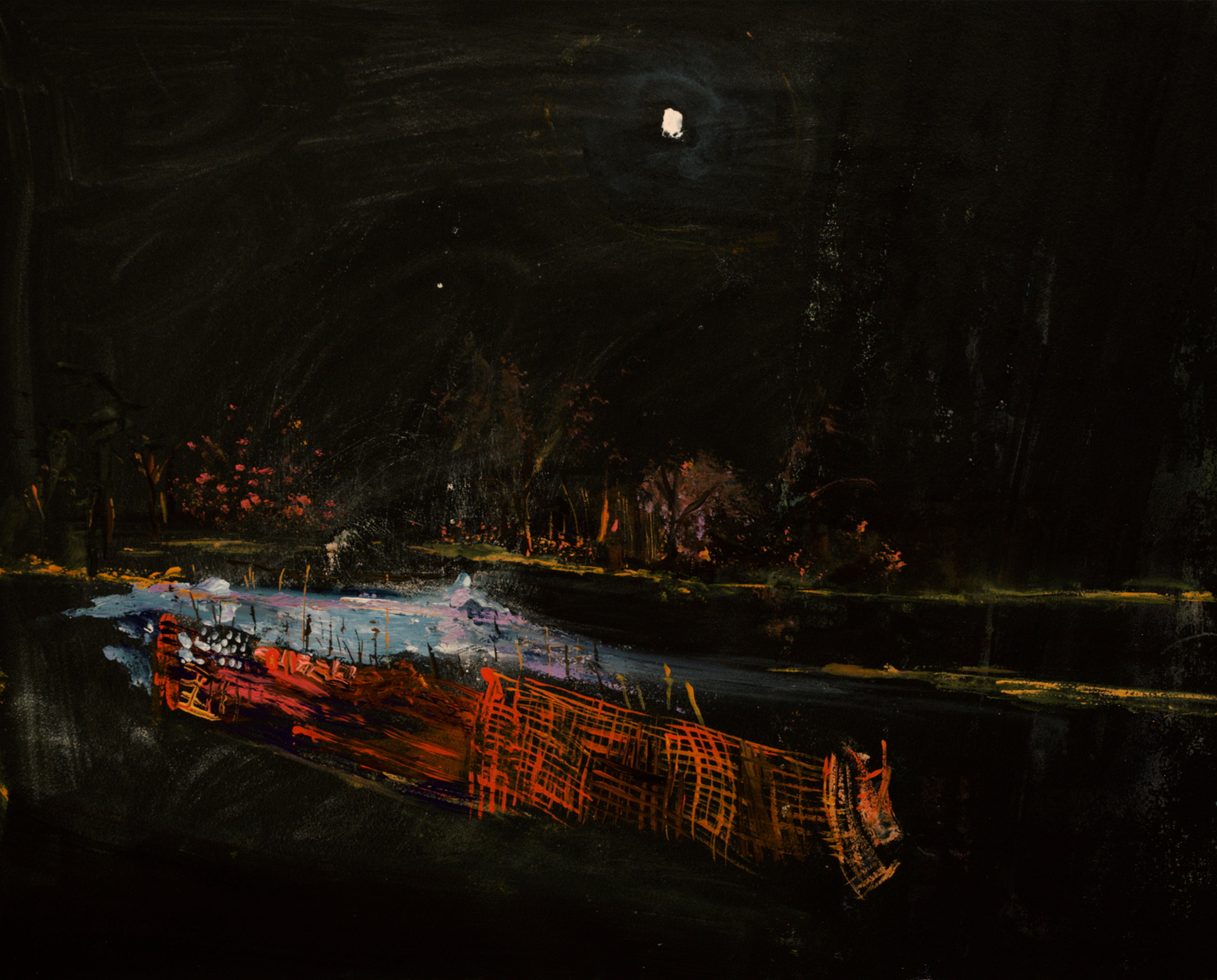
ASTRAL HOGS
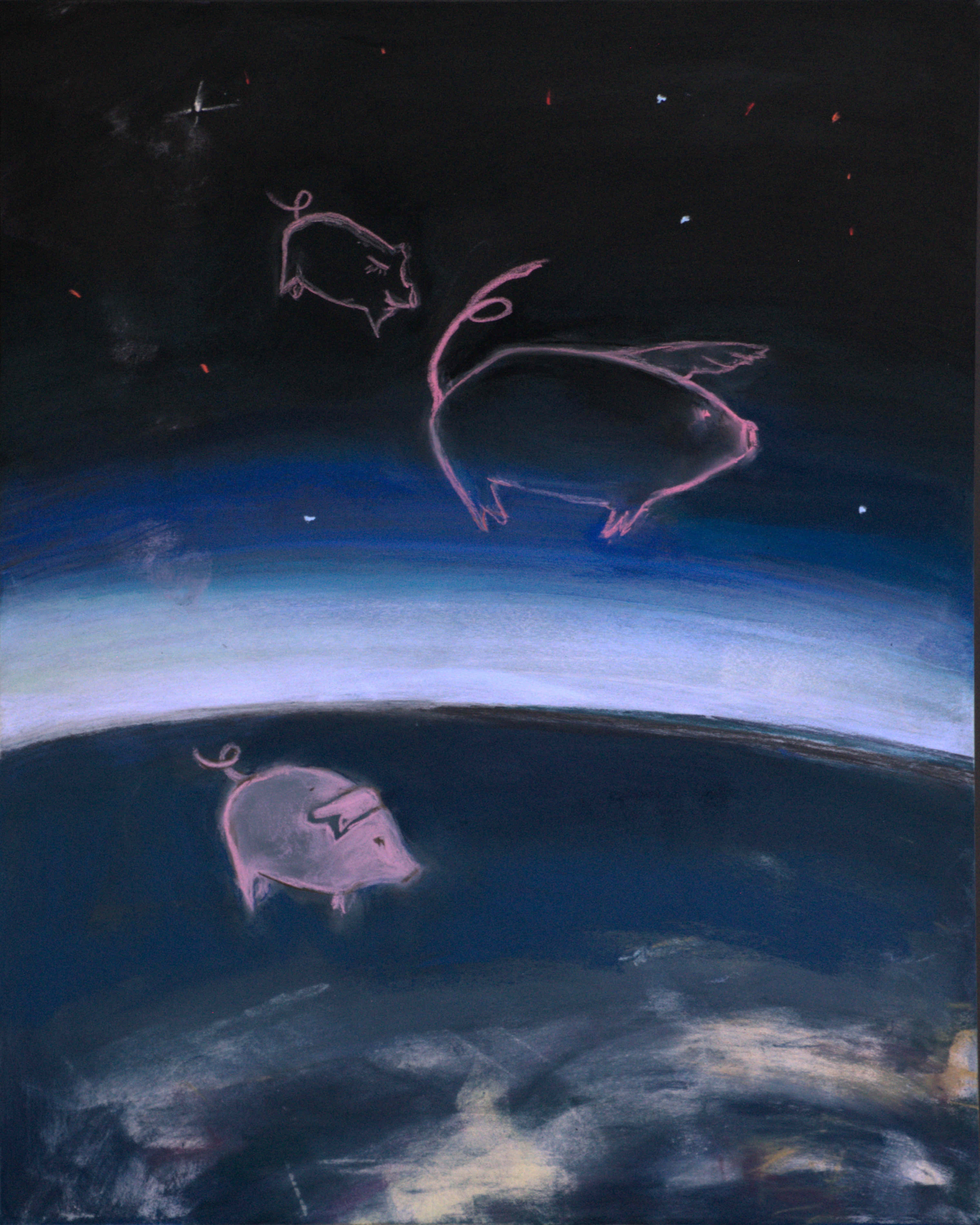
Susan Solomon
pond skating
sheep eating out of a bucket
SHELTER
Pablo V. Cazares
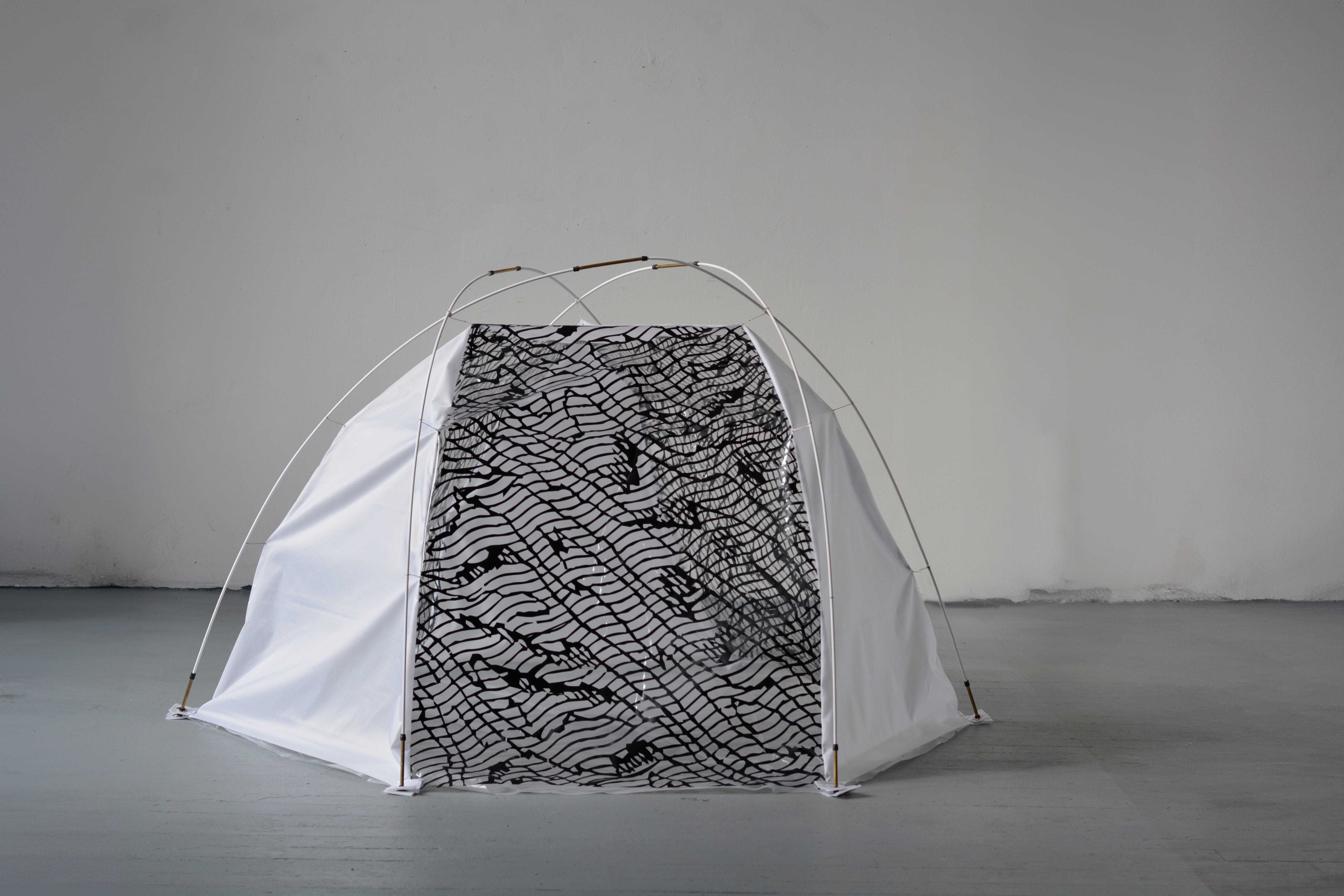


The motif on this structure is from a security envelope, a pattern on the inside of bank envelopes that promises protection through invisibility. There is no entrance to this shelter, and the fish hooks are sure to sting when you need to find a way in. The holes on top allow airflow for breathing, but will not shield you from rain. The pattern obscures you, but the walls are still clear. What value do invisibility, dissociation, and disengagement provide, and what is the cost?
Ripstop, vinyl, fish hooks, brass, wood. 2024.
ROOM
Lindsey Beth Meyers
Lynette pulls a yearbook from a box on the dining table, which is on top of another box, which contains another dining table. She talks about Seana’s unfortunate sixth-grade haircut, which, judging by the seven hundred other photos Lynette has already shown me this morning, was the least unfortunate of them all. She places the picture face down in my palm, then rifles for another. Cory is eyeing the refrigerator, which has been leaking for the last hour. I am eyeing the locked bedroom door. There is the faintest outline of an ‘S’ pressed into the wood, etched by a long absence of sun.
Is that her room?
Lynette looks over her shoulder, as though the house is full of locked doors with fading S’s on them, and my question is entirely unclear.
Yes.
Can we take a look?
Sure.
I swallow my surprise. I am doing my best impression of Walter Cronkite this morning. Walter Cronkite would hardly be stirred by a dead girl’s room. He was at The Battle of the Bulge.
Lynette’s hoard does not touch this room. Which is not to say it’s clean—it is not—but there is an unmistakable thumbprint to this mess. A youth. Impatience. The faintest scent of a long-expired bottle of Moonlit Path. This room exists nine years ago. Mess does not progress like everything else. It just sits, forms patterns in the carpet, reminds you where you were when it all went wrong.
The walls are eye-splitting turquoise. Most of her name—E, A, another A—is hung crookedly over a deflating beanbag. I wonder aloud where the N might be. Cory says she threw it at his head once, years ago, during an argument about missing Runescape coins. He takes a picture of the cracked window, which could look like a spiderweb or a constellation based on one’s level of spirituality. There’s a gym bag and a bronze Buddha and a bundle of index cards strewn across a half-painted desk. There is hair in the brush. The bed is unmade. When I run my hand over the topography of mussed sheets, they are warm, as though vacated just that morning. I find colonies of sand in a Snoopy blanket, the only living proof of her late-night excursions to the shore. I imagine her looking out the window where the sea wavers: A thin grey line, more smoke than water. I tap a fingernail along the tendrils of cracked glass and decide she probably saw Orion’s Belt. Then Cory picks up the watch on the vanity. It’s still ticking, he says. Something in him wavers, and he places it back on its dusty pedestal without photographing it. He won’t look at me.
I am not Walter Cronkite. All those articles teaching us how to be good photojournalists don’t amount to anything when a murdered kid’s sheets still smell like sunscreen. I was not at The Battle of the Bulge. I grew up down the street. If I squint, I can see my own childhood bedroom, squinting back.
I turn to Lynette, but she isn’t there. We hear her outside, whistling at the dogs as they canter sloppily down the street. The older dog crouches, starts to shit. Lynette stops, stares off, as though suddenly fascinated by the outside world, its sunlight, the color our food turns into. Cory drops his camera, and curses. She left so quickly, she forgot to take poop bags.
VILLAGE IN SNOW
Susan Solomon
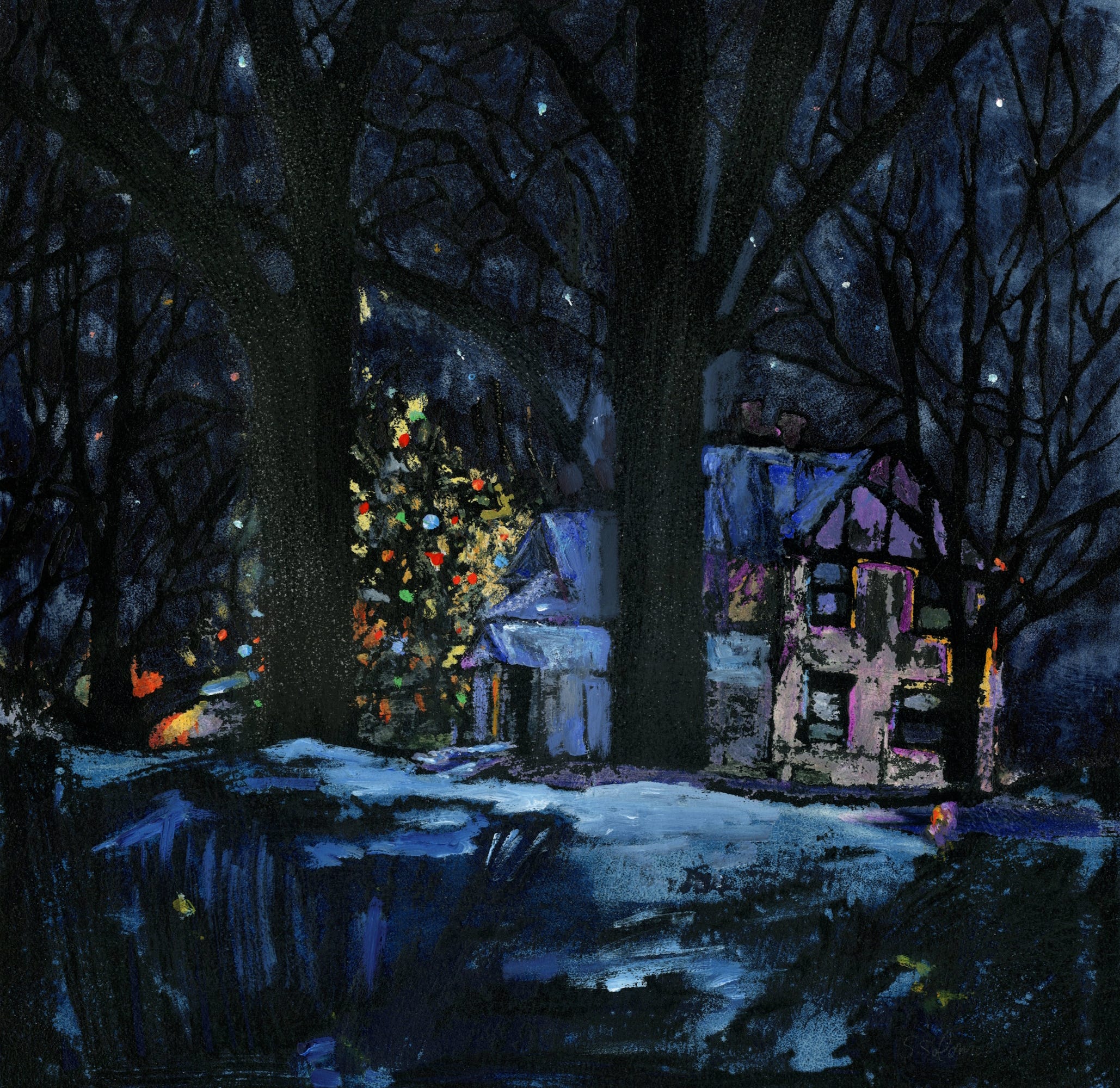
Staten Island Memory
Adam Breier
Through the
ozone
blue hazy summer
dump-thick air
you call.
Returning
over the Outerbridge
inhaling deep
gulping hard
my eyes water
my face tightens and
I know
I’m home
where
amidst the Fresh Kills funk
I had my first
kiss
caught my first
tadpole
wrote my first
poem.
So
when I drive
through the muck-and-sludge-fed fog
in the tan Mercury Topaz
of my Staten Island memory
my windows are
wide
open.
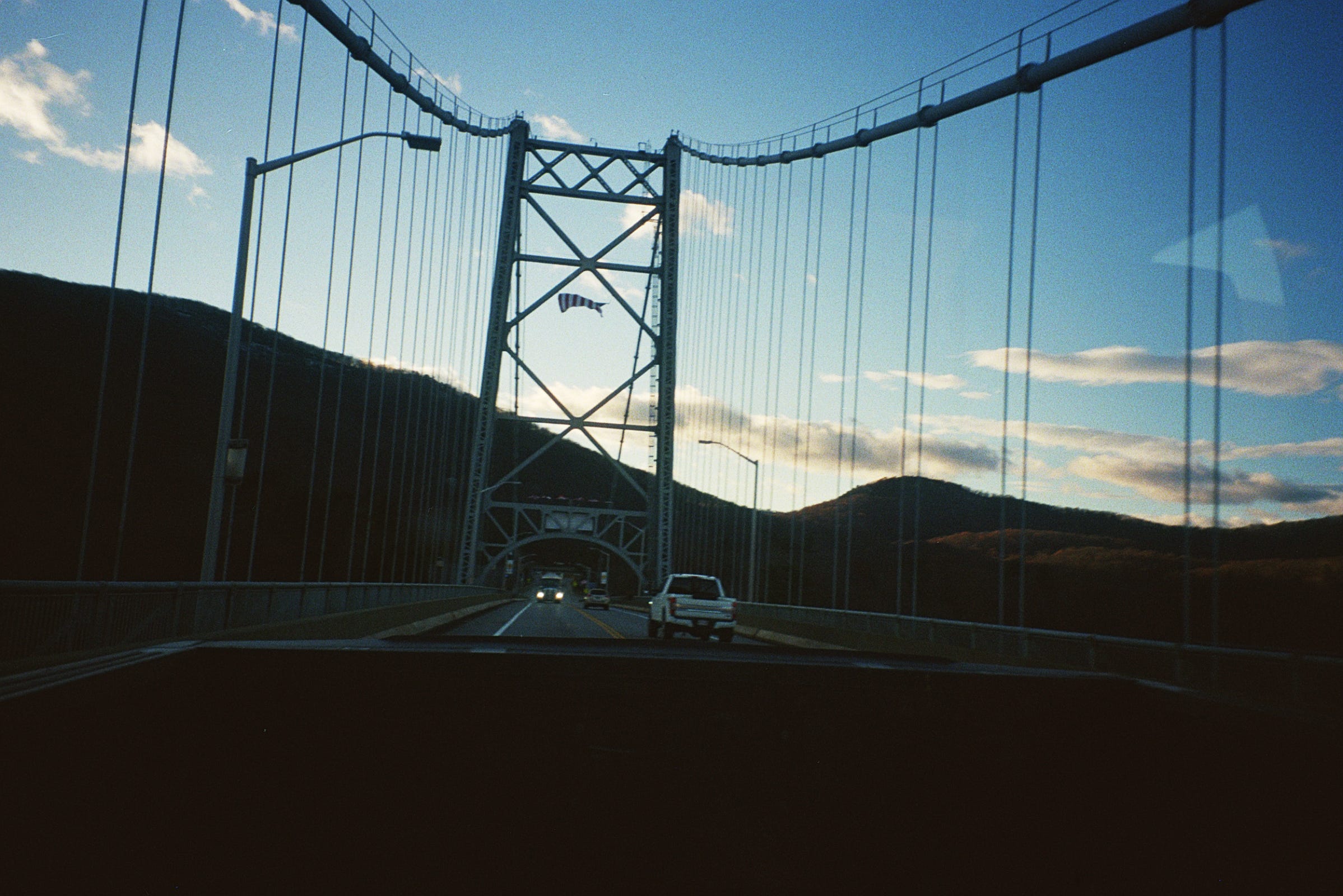
the creek at mystery point
tree frog
Postlude
Ian Foley
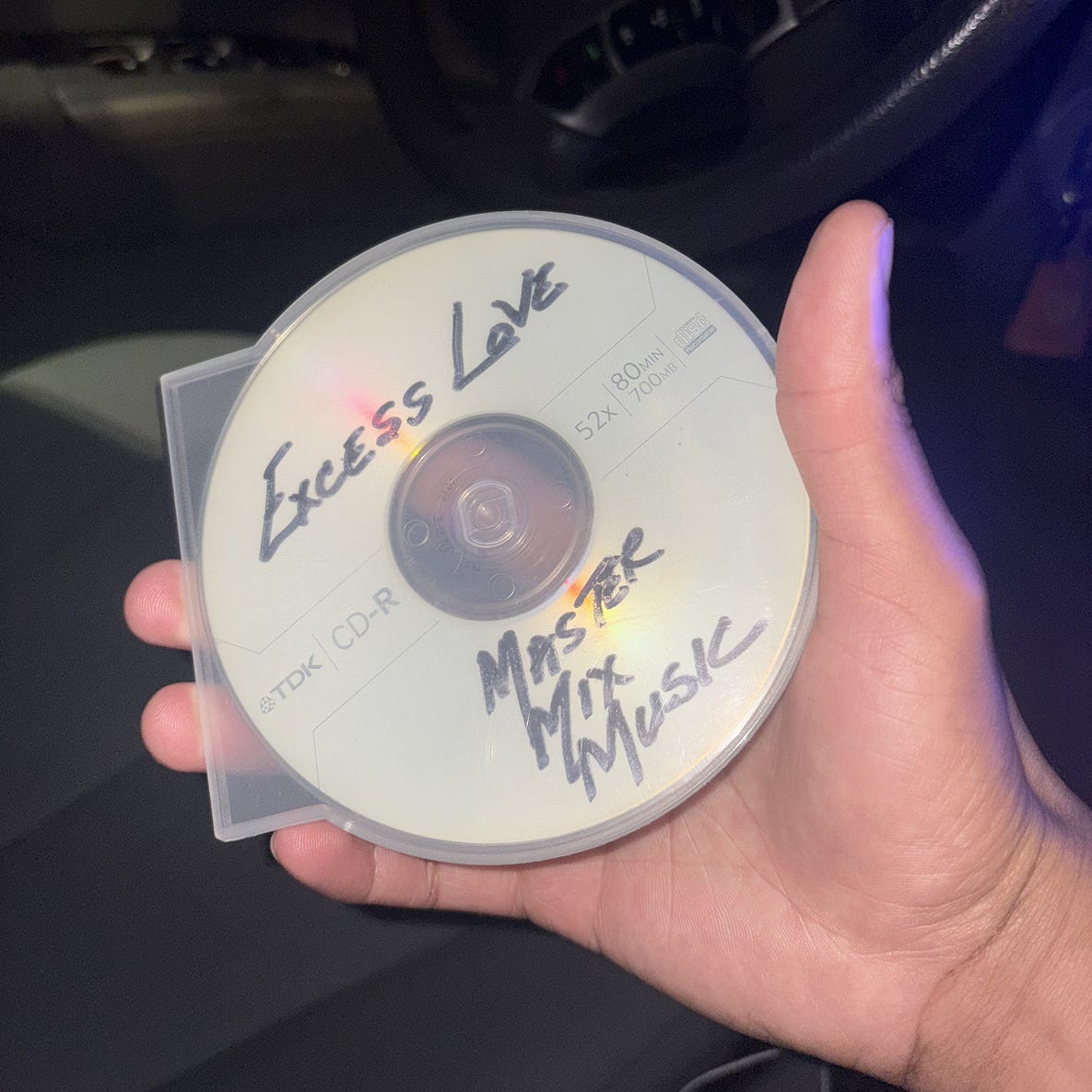
My entire life, my mom’s cousin (my first cousin, once removed) has made CD mixes for her. The mixes have a bunch of reggae and rocksteady songs. They were some of my first memories of music. This mix consists of some of my favorites from those CDs, with a few additions. Whenever I hear these songs, I feel at home.
Contributors
Adam Breier has one published poetry chapbook, An Odor of His Own, with poetry and short fiction appearing in: Stone Poetry Quarterly, So It Goes: The Literary Journal of the Kurt Vonnegut Memorial Library, Empire Poetry Verse: An Anthology of New York Poets, ‘Merica Magazine, The PPA Literary Journal, Soul Fountain, and Outsider Ink. You can follow Adam on Instagram @adam_breier_poetry and at adambreier.com.
Nix Carlson (she/they) is a queer, polyamorous, and neurodivergent poet and sign language interpreter based in Lexington, KY. Their work is forthcoming in the Eunoia Review. You can find them on Instagram at @bynixec.
Pablo V. Cazares is an artist based in the Pacific Northwest. He’s currently attending Rhode Island School of Design for his MFA in Sculpture. When not in the studio, he’s probably petting a dog or staring at the sky in earnest.
Nicola DiFusco is a NYC artist, designer, and educator. Through an interdisciplinary research-based practice, he explores commerce, communication, and interaction through emerging technology across the digital and physical threshold. Nicola is an adjunct professor in design and marketing, and holds his MFA in Digital Media from Rhode Island School of Design.
Elizabeth Dingmann Schneider lives and writes in Minneapolis. Her collection Blood is available from Red Bird Chapbooks, where she formerly served as a poetry editor. Elizabeth’s work has also been published in Third Wednesday, Sleet, the What Light Poetry Contest, Atlanta Review, Naugatuck River Review, Mosaic, Streetlight Magazine, Motherscope Magazine and Coal Hill Review.
Ian Foley is a Brooklyn-based DJ. Surrounded by Caribbean and gospel music from an early age, he was an active participant in concert bands and choirs while growing up. His approach is rooted in a deep love of bringing people together through music across genres. He can be found on SoundCloud @humanbian
Felipe Jimenez is a writer and a filmmaker. Originally from Costa Rica and raised mostly in Minnesota, he now lives in Brooklyn.
Noel Lee is full of regret. She is trying to get better at refraining from hawking the contents of her psychic junk drawer to all unassuming passersby. She is currently seeking recommendations for a nondescript, reliable slice shop in Boerum Hill.
Elias Levey-Swain is a writer, editor, photographer, yearner, and barista living in Brooklyn, NY. Out of the many places he calls home, he is most intensely territorial about the Hudson Valley, the best place on earth.
Lindsey Beth Meyers is a screen and television writer in Los Angeles. She has been published in Teen Vogue, Temporal Lobe Literary Journal, Wilderness House Literary Review, among others, and was a writer in residence at The Vermont Studio Center. She loves goats, sour apples, and Wes Anderson.
Anya Ptáček is a Brooklyn-based cook, recipe developer, and comedian. She is pretty confused about what kind of job she should have based on the above interests. If you have any thoughts or suggestions feel free to let her know. You can catch Anya at her next comedy show, Rat Candy, on November 22nd at 9:30pm on the Second City Mainstage.
Sophia Ptáček is currently living in Bogotá, Colombia. For 29 years, she thought she was born in a hospital in Chinatown, Manhattan. Her mom recently told her it was in FiDi, though. Sophia grew up on a sheep farm in the Hudson Valley and is clearly a little homesick.
Susan Solomon is a freelance paintress living in the beautiful Twin Cities area of Minneapolis/Saint Paul. Her work is a search for a light in dark places. She can be found on Instagram @solomon.painter.
Zibby Trewartha-Weiner (she/they) is a writer, visual artist, and art educator in Brooklyn. Her work is an offering of her own personal healing journey and a celebration of authentic creative expression. You can find more of Zibby’s work online at zibbytw12.substack.com. Or find them teaching classes at RecCreate Collective, and making dinner at Ridgewood Commons every Sunday night.
Regarding the topic of the article, your analytical deconstruction of the concept of home, moving beyond its conventional and sometimes cloying definion, is remarkably astute. I find a similar sense of dwelling, a true mental residence, within the narratives of particularly dense books, which often become a temporary home for my thoughts.